2 Corinthians 4:1-2 (WEL) We don’t become discouraged from having this ministry, since we received it through mercy. 2 We have rejected the hidden things of dishonesty, not living in deceptive practices, nor deceitfully corrupting the Word of God, but by openly showing the truth, presenting ourselves to everyone’s conscience in God’s sight.
Summary of chapter 4:
Adam Clarke: “Ministers should be esteemed by their flocks as the stewards of God, whose duty and interest it is to be faithful, 1Co 4:1-2. Precipitate and premature judgments condemned, 3-5. The apostle’s caution to give the Corinthians no offense, 6. We have no good but what we receive from God, 7. The worldly mindedness of the Corinthians, 8. The enumeration of the hardships, trials, and sufferings of the apostles, 9-13. For what purpose St. Paul mentions these things, 14-16. He promises to send Timothy to them, 17. And to come himself shortly, to examine and correct the abuses that had crept in among them, 18-21.”
Summarized Bible by Brooks:
Contents: Truth taught, commended by the life. The preaching of the Lordship of Christ. The suffering of true ministers with Christ.
Characters: God, Christ, Paul.
Conclusion: A steadfast adherence to the truths of the Gospel, backed by constancy and sincerity, will commend the servant of God to the opinion of wise men. They should not be of proud spirit, but realize that they themselves are but vessels of little worth and in their perplexities for Christ’s sake let them know that God is able to support them and in Him they should ever trust and hope.
Key Word: Ministry, 2Cor 4:1.
Strong Verses: 2Cor 4:2, 4:5, 4:6, 4:7, 4:11, 4:16, 4:17, 4:18.
Striking Facts: 2Cor 4:13-14. A great sustaining power for the persecuted servant of Christ is the hope of resurrection through Him. This hope will save us from sinking. We know that Christ was raised and His resurrection is an earnest and assurance of ours. What reason has a Christian to fear death who dies in hope of being raised by the Lord Jesus?
V1 We don’t become discouraged from having this ministry, since we received it through mercy.
They did not earn, graduate from some educational system, or choose this ministry. They received it by the mercy of God, because they did not deserve it.
The discouragement they might experience is being exhausted and wanting to give up.
The motive is to keep serving the Lord Jesus and continuing in it by God’s assisting grace. We must be faithful and are able to do so by God’s grace.
V2 We have rejected the hidden things of dishonesty, not living in deceptive practices, nor deceitfully corrupting the Word of God, but by openly showing the truth, presenting ourselves to everyone’s conscience in God’s sight.
We do not want to miss interpret or twist the words of God by allegory, a human philosophy or theology, personal opinion, etc. They will not interpret the Bible in any way other than the plain, normal sense (literal). The words of the Bible are God’s chosen words and are not to be tampered with like many do.
Dishonestly (G152) αἰσχύνη, which means shame. Here, it means doing something contrary to God’s meaning of a text and being ashamed at judgment (Bema Seat) for doing so. (Greek-English Lexicon of the New Testament Based on Semantic Domains (Louw & Nida)) “painful feeling due to the consciousness of having done or experienced something disgraceful – shame, disgrace.”
Deceptive practices (G3834) πανουργία, which means crafty and using trickery to deceive. This can be philosophical, personality, and any type of lie to deceive.
(Greek-English Lexicon of the New Testament Based on Semantic Domains (Louw & Nida)) “trickery involving evil cunning – craftiness, treachery. ὡς ὁ ὄφις ἐξηπάτησεν Εὕαν ἐν τῃ̂ πανουργίᾳ αὐτου̂ as the snake deceived Eve by its treachery 2CO.11:3.”
Deceitfully (CSB version is “distorting”). This is the Greek word (G1389) δολόω, which means (Greek-English Lexicon of the New Testament Based on Semantic Domains (Louw & Nida)) “to cause something to be or to become false as the result of deception or distortion – to cause to be false, to distort.”
The above 3 words suggest human manipulation of God’s word by wrong, shameful interpretation methods. Some wrong forms are Covenant Theology framework, allegory, and deliberately using an English word to distort the meaning to what the preacher/teachers wants it to mean.
Compare the interpretation of John 3:16 via Felo AI analysis:
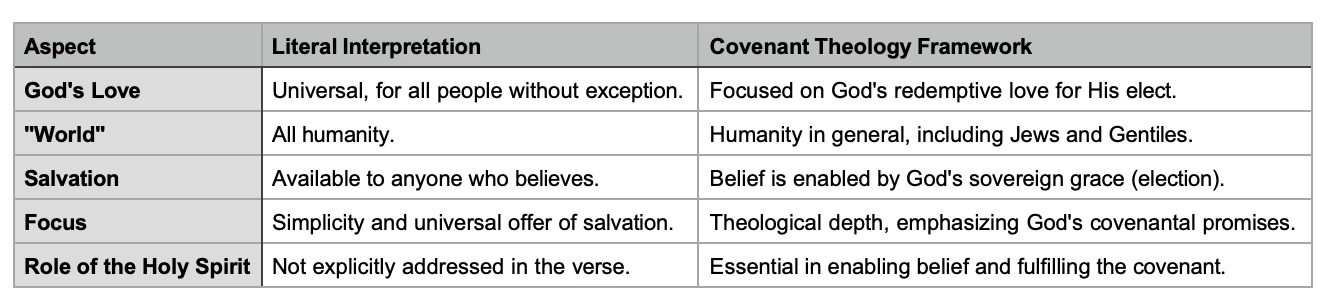
We learn:
- About wrong interpretation.
- How Paul interprets God’s words.
Questions:
- God expects us to believe His words. Do you?
- Do you read and study the Bible in the plain, normal/literal sense?